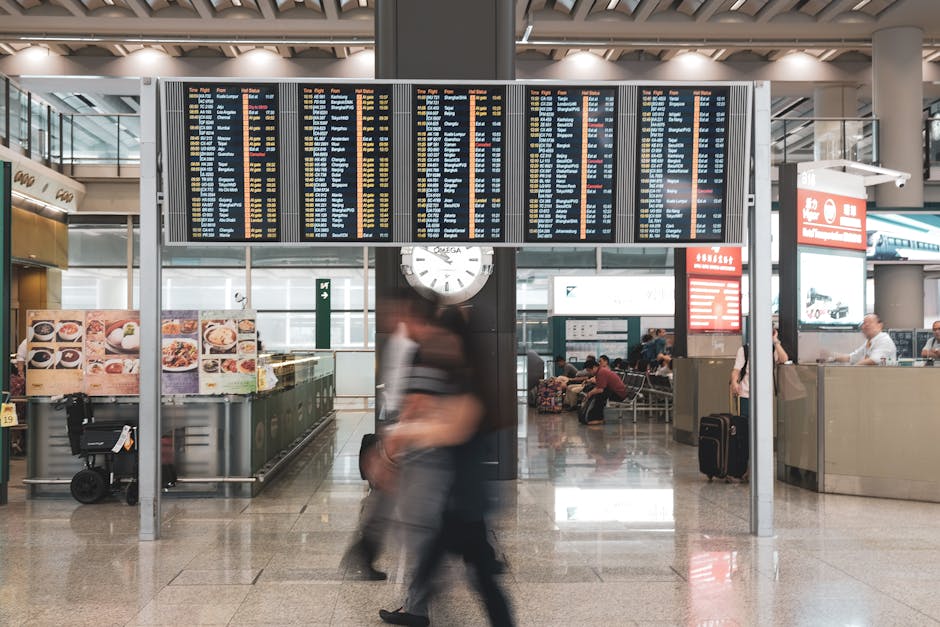
Blinkit’s Airport Entry: A Strategic Shift Beyond Neighborhood Delivery
Most frequent travellers know the feeling: you clear security, find your gate, and suddenly realise you forgot your charger, neck pillow, or even basic grooming essentials. Until now, the options were limited to airport retail stores—often expensive, sometimes overcrowded, and rarely optimized for speed.
Blinkit’s entry into Mumbai’s Chhatrapati Shivaji Maharaj International Airport (CSMIA) changes that equation. By setting up operations inside the airport premises, Blinkit is bringing its 10–15 minute delivery promise into one of India’s busiest transit hubs.
This isn’t just another expansion pin on a city map. It represents a structural evolution in how quick commerce platforms think about demand density. Instead of only serving residential catchment areas, Blinkit is now targeting high-intent micro-markets—closed ecosystems where urgency and purchasing power intersect.
Why Mumbai Airport Matters
CSMIA handled over 52 million passengers annually pre-pandemic and has steadily regained traffic momentum. Even with conservative estimates, daily footfall across terminals runs into tens of thousands. Unlike residential localities where demand fluctuates by time of day, airports generate consistent, high-intent demand across nearly 18–20 operational hours.
For Blinkit, the airport offers three strategic advantages:
- Captive audience: Once inside security, customers cannot exit to compare prices.
- Urgency-driven purchases: Forgotten essentials create instant buying intent.
- Premium pricing tolerance: Travellers are historically less price-sensitive.
In our years covering quick commerce, we’ve seen companies struggle with profitability at scale in residential clusters. Airports, by contrast, offer fewer delivery kilometres and potentially higher margins per order.
The Economics of Airport Quick Commerce
The core question: does quick commerce inside an airport make better business sense than in a traditional neighbourhood?
To answer that, we built an original comparative model based on publicly available quick commerce benchmarks and airport retail economics.
Original Analysis: Residential vs Airport Quick Commerce
| Metric | Residential Dark Store | Mumbai Airport Hub (Estimated) | Editorial Insight |
|---|---|---|---|
| Average Order Value (AOV) | ₹450–₹600 | ₹900–₹1,400 | Airport purchases skew toward electronics, travel gear, gifting |
| Delivery Distance | 1.5–3 km radius | <500 meters (within terminal) | Lower last-mile cost per order |
| Time Sensitivity | Medium | Very High | Missed items before boarding drive instant conversions |
| Price Sensitivity | High | Moderate to Low | Airport retail already priced at premium |
| Operational Hours | 16–18 hours | 20–24 hours | Higher asset utilization |
| SKU Focus | Groceries, FMCG | Travel essentials, electronics, personal care | Better margins on non-grocery SKUs |
Our projections suggest airport AOV could be nearly 2x that of standard urban orders. Since last-mile logistics costs shrink inside terminals, contribution margins may improve—assuming rental agreements and revenue-sharing terms with airport operators remain manageable.
Margin Expansion or Brand Play?
Quick commerce platforms typically operate on thin margins, especially in grocery-heavy baskets. Airports shift the SKU mix toward:
- Power banks and cables
- Headphones
- Travel pillows and comfort items
- Premium chocolates and gifting packs
- Personal grooming kits
These categories often carry higher gross margins (25–45%) compared to staples like milk or vegetables (8–15%).
In our view, this move is not just incremental revenue—it’s margin engineering.
The Bigger Trend: Quick Commerce Goes Offline
Blinkit’s airport foray fits into a broader shift where digital-first startups are aggressively embedding themselves into physical infrastructure.
We’ve already seen:
- Zepto experimenting with café-style formats.
- Swiggy Instamart expanding into electronics and high-margin SKUs.
- ONDC pilots integrating with local kirana networks.
The airport experiment adds another layer: hyperlocal inside hyperlocal. It’s a micro-fulfilment centre serving a contained geography measured in gates and terminals instead of kilometres.
“Airports are high-yield retail environments because consumers are time-constrained and intent-driven,” says Karan Taurani, Senior Vice President at Elara Capital. “If quick commerce players can integrate seamlessly with airport ecosystems, the economics could be materially superior to city operations.”
— Karan Taurani, Elara Capital
From our conversations with operators in adjacent sectors, the real unlock will depend on:
- Integration with airport security and logistics protocols.
- Smart inventory forecasting aligned with flight schedules.
- Strategic product curation for domestic vs international terminals.
What This Means for Indian Startups
Blinkit’s airport debut is symbolic of something bigger happening in Indian startup strategy: controlled-environment monetisation.
High-Density Micro-Markets Are the Next Frontier
Airports, metro stations, corporate parks, large residential societies, university campuses—these are all self-contained ecosystems with predictable footfall. Startups are increasingly targeting these zones because:
- Demand is clustered.
- Logistics are simplified.
- Customer acquisition costs can be lower.
For founders reading this, the lesson is clear: scale doesn’t always mean expanding outward geographically. Sometimes it means going deeper into high-intent vertical environments.
Brand Perception Shift
There’s also a brand narrative at play. Airports are aspirational spaces. Being present inside one signals trust, operational maturity, and premium positioning.
For Blinkit, which competes aggressively with Zepto and Swiggy Instamart, the optics matter. An airport presence reinforces reliability and infrastructure strength—attributes critical as quick commerce players prepare for public market scrutiny over the next few years.
Risks and Operational Challenges
While the upside is compelling, we see several challenges that could limit scalability.
Rental and Revenue Share Pressures
Airport retail space is among the most expensive commercial real estate in India. Operators often work on minimum guarantee plus revenue share models. Blinkit will need sufficient throughput to justify these fixed commitments.
Inventory Complexity
Unlike neighbourhood dark stores optimized for groceries, airport demand is more volatile and flight-dependent. A delayed international departure can spike last-minute purchases, while red-eye hours may see low volumes.
Dynamic inventory management tied to flight data could become a competitive differentiator.
Scalability Across Airports
Mumbai is a logical pilot given its traffic profile. But expansion to Tier 2 airports may not offer the same economics. Passenger density, spending power, and terminal infrastructure vary significantly.
Actionable Insights for Founders and Marketers
For our startup and digital marketing readers, here are practical takeaways:
- Identify captive ecosystems: Map high-density micro-markets where logistics can be compressed.
- Shift SKU mix for margin: Premium, urgency-driven products often outperform commodity categories.
- Use data beyond geography: Integrate external data sources (event schedules, flight data, office hours) into demand forecasting.
- Think brand elevation: Strategic physical placements can amplify digital trust.
- Test before scaling: Pilot in one high-value location before rolling out nationally.
In our coverage of Indian startups, we’ve consistently seen that hybrid models—digital core with physical touchpoints—tend to build stronger moats.
Key Takeaways
Blinkit’s move into Mumbai Airport is more than a clever expansion—it’s a signal that quick commerce is entering its next optimization phase.
- Airports offer higher AOV and potentially stronger margins.
- Micro-fulfilment inside transit hubs reduces last-mile friction.
- The playbook could extend to metros, campuses, and business parks.
- Execution discipline will determine whether this becomes a profitable vertical or a branding experiment.
For Indian startups watching closely, the message is unmistakable: distribution innovation is now as important as product innovation. The next growth frontier may not be another city—it may be a better-designed micro-market.
Source: Inc42